

Cheap waste clearance quotes Tufnell Park businesses
Posted on 12/08/2026

If you run a business in Tufnell Park, waste has a habit of piling up at exactly the wrong time. One minute it's a few broken chairs, a few boxes, maybe some packaging after a delivery rush. Next minute, the back room looks like it has quietly turned into a storage unit. That is where cheap waste clearance quotes Tufnell Park businesses start to matter: not as a bargain hunt for the sake of it, but as a sensible way to keep costs controlled without cutting corners on service, safety, or compliance.
In this guide, we'll break down how business waste clearance pricing usually works, what drives the quote up or down, how to compare providers properly, and where companies often lose money without realising it. You'll also get a practical checklist, a simple comparison table, and a few hard-earned tips that can save you from the usual headaches. Let's face it, nobody wants to overpay for rubbish removal. But nobody wants a cheap quote that turns expensive halfway through the job either.
Why cheap waste clearance quotes Tufnell Park businesses matters
For a local business, waste clearance is not just about tidying up. It affects day-to-day operations, customer impression, storage space, staff morale, and sometimes even safety. A cluttered office, shop, studio, cafe, or managed property can quickly create friction. People trip over stuff. Stock gets mixed with junk. Old furniture starts acting like permanent furniture. And before long, that "we'll deal with it later" pile becomes a real problem.
That is why getting a quote matters early. A clear, competitive price helps you plan around cash flow, compare services properly, and avoid the classic trap of booking in a rush. In business, even small savings make a difference when you are repeating a service every month or every quarter. But "cheap" should never mean vague. A good quote should be easy to understand, explain what is included, and make it obvious what could change the price.
There is also a local practicality to this. Tufnell Park businesses often operate from compact premises, shared buildings, or busy streets where access can be awkward. Tight stairwells, limited parking, and timed collections all affect the job. A quote that ignores those realities is not really a quote. It is a guess. And guesses, as you will know, have a funny habit of turning into extra charges.
If your business handles regular clear-outs, you may also want to look at broader service pages such as the services overview or more specialised support like office clearance in Tufnell Park. Those pages help you match the job to the service, which is often the first step toward a better price.
Expert summary: A cheap quote is only valuable if it is transparent, realistic, and matched to the actual waste stream your business needs removed. Price matters, yes. Certainty matters too.
How cheap waste clearance quotes Tufnell Park businesses works
The quoting process is usually more straightforward than people expect. In most cases, a provider will want to know what needs removing, roughly how much there is, whether the waste is mixed or separated, and how easy it will be to access. Some companies can quote from photos. Others may ask for a short visit if the job is bigger or more complicated. For straightforward collections, an estimate may be enough. For larger office declutters or builder waste, a clearer assessment is usually wiser.
Here is the practical flow:
- You describe the waste - for example old desks, cardboard, broken fixtures, packaging, or bagged rubbish.
- The provider estimates volume and labour - usually based on how much vehicle space the waste will take and how much handling is involved.
- Access is considered - stairs, lifts, loading restrictions, narrow entrances, and parking all affect efficiency.
- Any special items are checked - electronics, bulky furniture, garden material, or construction debris can change the handling process.
- You receive a quote - ideally with a clear breakdown of what is included.
In the real world, a quote can be shaped by far more than the pile itself. A small amount of waste in a basement office can take longer than a larger pile sitting at street level. That sounds obvious, but it is one of the main reasons cheap quotes sometimes become less cheap by the end of the job.
If your waste is a mix of furniture, paper records, boxes, and old display items, it can help to split the job by category. For instance, furniture-specific items may be better handled through furniture disposal services, while ongoing bagged rubbish may fit a regular rubbish collection arrangement. This is one of those small decisions that can quietly improve both cost and speed.
Key benefits and practical advantages
People often focus on the headline price, but a genuinely good clearance quote delivers much more than that. It gives your business breathing room. It helps staff work in a cleaner environment. It reduces the chance of unnecessary storage. And, if you choose well, it can remove waste in a way that is tidy, discreet, and not disruptive to customers.
- Better cost control: You can compare quotes before committing, instead of accepting the first number that lands in your inbox.
- Less disruption: A planned clearance can be fitted around trading hours, deliveries, or quieter periods.
- More usable space: Whether it is a back office, stock room, or shared corridor, clutter eats usable square footage fast.
- Cleaner brand presentation: If clients, tenants, or suppliers visit your premises, a clean space sends the right signal.
- Improved sorting and recycling: A clear plan often makes it easier to separate recyclable material from general waste.
- Lower stress: A surprising number of managers delay waste removal simply because they do not want another thing to organise. A fixed, practical quote helps with that.
There is also a trust angle. A provider offering transparent pricing is usually easier to deal with across the rest of the job too. In our experience, the same company that explains costs clearly is often the company that explains timing clearly, and that matters just as much.
For businesses with a sustainability angle, it can also be worth reading a local provider's thinking on recycling and sustainability. Even if you are mainly trying to keep costs down, a waste contractor that sorts and routes materials sensibly can reduce the amount you send to landfill. That is good for the environment, and fair enough, good for your brand too.
Who this is for and when it makes sense
This topic is relevant for a wider range of Tufnell Park businesses than people first assume. Office teams, independent retailers, landlords, letting agents, cafes, salons, studios, and builders all deal with clearance needs in slightly different ways. Even a small company may need a one-off haul after a refit, a move, or a stock refresh.
You may need cheap waste clearance quotes if you are:
- closing or relocating an office
- clearing out old furniture after a refit
- removing packaging and mixed rubbish after a delivery period
- tidying a basement, loft, or storage room
- handling builders' waste after light works or repairs
- preparing a commercial property for letting or inspection
- setting up a regular waste removal routine for a busy premises
There is a subtle but important distinction between cheap and good value. Cheap is about the number on the quote. Good value is about what happens when the team arrives, how long the clearance takes, whether the area is left clean, and whether the job is done without awkward surprises. If you have ever had a "cheap" service become a half-day of chasing, you already know the difference.
It also makes sense if your business is trying to avoid downtime. A fast, well-priced clearance can prevent clutter from slowing everything else down. Sometimes the biggest win is simply getting the room back.
Step-by-step guidance
If you want the best chance of getting a fair quote, don't just ask, "How much for waste clearance?" That question is too broad. A better approach is to make the job easy to assess from the start. Here's a simple process that works well for most businesses.
- Sort the waste first
Separate general rubbish, recyclable materials, bulky items, and anything potentially restricted. Even a rough sort can reduce uncertainty and improve pricing. - Count what you actually have
Number of bags, number of desks, number of filing cabinets, or number of storage crates. The more concrete your description, the better the quote. - Take clear photos
Wide shots, close-up shots, and a picture of access points if needed. A quick photo can save a lot of back-and-forth. It is boring, but effective. - Ask what is included
Find out whether labour, loading, disposal, and VAT are included. Ask about extra charges before you book. Plain English only, please. - Check access details
Does the team need to carry items down stairs? Is parking restricted? Is there a loading bay or timed entry window? - Confirm timing
Some business jobs need early morning or evening clearance. That can be fine, but it should be priced clearly. - Request written confirmation
Even a simple email summary helps prevent misunderstandings on the day.
A quick example: a small consultancy in a converted Victorian terrace might want two desks, a broken printer, some archive boxes, and a few bagged items removed. That sounds simple. But if the desks are on a top floor and parking is tight, the quote needs to reflect the real labour involved. On the other hand, a street-level retail stock clear-out with easy loading can often be handled more efficiently. Same general job title, very different effort.
If you need a broader clearance, it may help to see how a full waste clearance service is structured, especially if you are comparing one-off clearance against repeat collections.
Expert tips for better results
There are a few small habits that make a real difference when you are trying to keep costs low without sacrificing quality. They are not flashy. They just work.
- Bundle similar jobs together - if you need furniture removed and general rubbish cleared, doing them in one visit can be more efficient than splitting them up.
- Be honest about volume - underestimating the amount of waste is the fastest route to a price change.
- Use the right service type - office waste, builders' debris, garden material, and household-style junk are not always treated the same way.
- Plan around access - if you can leave items close to the exit, you may reduce loading time.
- Ask about recycling separation - it can influence disposal costs and may support your sustainability goals.
- Avoid peak pressure booking - last-minute clearance before a handover or inspection often costs more because the provider has less flexibility.
One small but useful tip: if your business is in a property with storage space you also use for stock or files, think twice before cramming waste into the corner "for now". That corner has a nasty way of becoming a permanent tax on your square footage. Truth be told, we have all seen it happen.
You may also want to review insurance and safety guidance before booking. Even though waste clearance is a routine job, lifting, moving, and loading heavy items still carry risk. A responsible provider should treat access, lifting, and on-site conduct seriously.

Common mistakes to avoid
Most costly clearance mistakes are simple, predictable, and avoidable. That is the annoying bit. The good news is you can sidestep them with a little care.
- Choosing the cheapest quote without checking what it includes
A low headline price can hide charges for labour, parking, loading, or disposal. - Mixing everything together
Mixed waste is often harder to sort and can be more expensive than separating items in advance. - Ignoring access issues
Stairs, lifts, narrow hallways, and restricted parking all affect the job. - Forgetting about business data or confidential material
Paper records, hard drives, and sensitive documents should be handled carefully. - Booking too late
When you are under time pressure, you lose negotiating room. Simple as that. - Assuming all waste is treated the same
Bulky furniture, garden waste, and builders' waste may need different handling.
A surprising number of businesses also skip the basic question: "What happens after collection?" If you care about recycling, responsible disposal, or avoiding mess left behind, ask. A decent provider should be able to explain the process without sounding cagey. If they get defensive over a normal question, that tells you something.
Tools, resources and recommendations
You do not need fancy software to manage waste clearance well. A few simple tools and habits are enough for most small and medium-sized businesses.
- Phone camera - take clear photos of the waste and access route.
- Simple inventory list - note item type, quantity, and whether anything is fragile or unusually heavy.
- Internal sign-off process - one person should approve the clearance so there is no confusion on the day.
- Calendar reminders - useful for regular office clear-outs or end-of-quarter tidying.
- Waste segregation bins or labels - handy if your team is separating recycling from general waste.
If you are still deciding what service fits best, the pages on office clearance, builders' waste disposal, garden waste removal, and house clearance can be useful reference points. Not because your business is a house, obviously, but because many commercial jobs overlap with domestic-style waste categories when they include furniture, fixtures, or mixed clutter.
For readers who want to understand the company's broader approach, the about us page can also help set expectations around service style and professionalism. And if payment terms matter to your accounts process, it is worth checking payment and security information before confirming any booking.
Law, compliance, standards and best practice
Business waste is not something to treat casually. In the UK, companies generally have a responsibility to make sure waste is handled appropriately and passed to a suitable carrier. You do not need to become a legal expert to book a clearance, but you should be confident that the provider operates responsibly and can explain how waste is managed.
Best practice usually includes the following:
- using a provider that handles waste professionally and keeps documentation in order
- separating confidential materials where needed
- making sure hazardous or specialist items are declared in advance
- not leaving waste on pavements, in shared areas, or where it could create a hazard
- keeping an internal record of what was removed and when, especially for regular clearances
If you are responsible for offices, retail space, or managed premises, you should also think about fire exits, trip hazards, and common areas. A cluttered corridor is not just untidy. It can become a safety issue. Nobody wants that awkward conversation after the fact.
On the ethical side, it is reasonable to ask whether a provider takes labour, sourcing, and disposal standards seriously. If modern slavery or supply-chain responsibility matters to your procurement process, the company's modern slavery statement can be part of your due diligence. That may sound formal for a small clearance job, but business customers often need that reassurance.
Options, methods, and comparison table
There is no single "best" way to arrange clearance. The right method depends on how much waste you have, how often it appears, and how much control you want over timing and cost.
| Method | Best for | Typical advantages | Possible downside |
|---|---|---|---|
| One-off clearance | Moves, refits, end-of-lease clearances | Simple, quick, good for large clean-outs | Less ideal for ongoing waste generation |
| Regular scheduled collection | Busy offices, shops, hospitality premises | Predictable, keeps clutter under control | May cost more over time if volumes are low |
| Targeted furniture removal | Desks, chairs, cabinets, display units | Efficient for bulky items, often easier to price | Not suitable for mixed waste piles |
| Mixed waste clearance | General business clutter, stock room clear-outs | Flexible, handles several waste types together | Can be pricier if sorting is poor |
| Specialist clearance | Builders' waste, lofts, sensitive items | Better suited to specific material types | Requires more detail upfront |
If you are unsure which route is right, start by comparing the size of the job and how often it repeats. A one-off clearance is often enough for seasonal stockrooms or relocation projects. But if waste shows up every week, a recurring arrangement may actually be the cheaper option in the long run. Sometimes "cheap" is not the lowest quote today; it is the one that avoids repeat mess tomorrow.
Case study or real-world example
Here is a realistic scenario. A small creative studio in Tufnell Park is getting ready to refresh its workspace. The team has several old desks, a broken shelving unit, packaging from new furniture deliveries, and a few bags of general rubbish. They also need the job done between meetings, without a lot of noise or disruption. Nothing dramatic. Just one of those jobs that hangs over everyone's head.
If they ask for a quote with no detail, they will probably get a broad estimate. That may be fine, but it leaves room for adjustments. If instead they send photos, list the bulky items, mention that access is via stairs, and specify the time window, they are more likely to get a tighter and fairer quote. They may also be guided toward a service that separates furniture removal from general rubbish, which could improve efficiency.
That is the practical lesson: the better the information, the better the quote. Not glamorous, but true. And for local businesses, where time is already spoken for by actual work, that kind of clarity is worth quite a lot.
For businesses in the area who also want to understand local life and the way the neighbourhood works, Tufnell Park life from the locals gives useful context, while urban living and quiet serenity in Tufnell Park offers a broader picture of the area's character. That may sound unrelated at first, but local pace, street access, and building type often shape how waste clearance needs to be organised.
Practical checklist
Use this before requesting a quote or confirming a booking.
- Have you listed the waste clearly?
- Have you separated furniture, recyclables, and general rubbish where possible?
- Have you taken photos of the waste and access route?
- Do you know whether stairs, lifts, or parking limits apply?
- Have you checked whether the quote includes labour and disposal?
- Have you asked about any extra charges for bulky or awkward items?
- Have you confirmed the date, time, and access arrangements?
- Have you made sure any confidential materials are removed separately?
- Have you considered whether a one-off or recurring service makes more sense?
- Have you kept a copy of the quote or confirmation for your records?
That last point is easy to overlook, and then, somehow, nobody can remember what was agreed. Funny how that happens.
Conclusion
Getting cheap waste clearance quotes for Tufnell Park businesses is really about getting the right balance: fair price, clear scope, reliable timing, and a service that respects your premises. The cheapest number on the page is not always the best deal. A transparent quote that reflects your actual waste, access conditions, and scheduling needs is usually better value and far less stressful.
When you compare like for like, prepare your information properly, and ask the right questions, you put yourself in control. That alone can save money. It also saves time, which for most businesses is the thing everyone wants more of and never seems to have enough of.
Get a free quote today and see how much you can save.
And if you are still weighing up the type of clearance you need, start with the service that matches the real mess in front of you. It sounds obvious, but it is usually the smartest move. Small step, less clutter, better day.
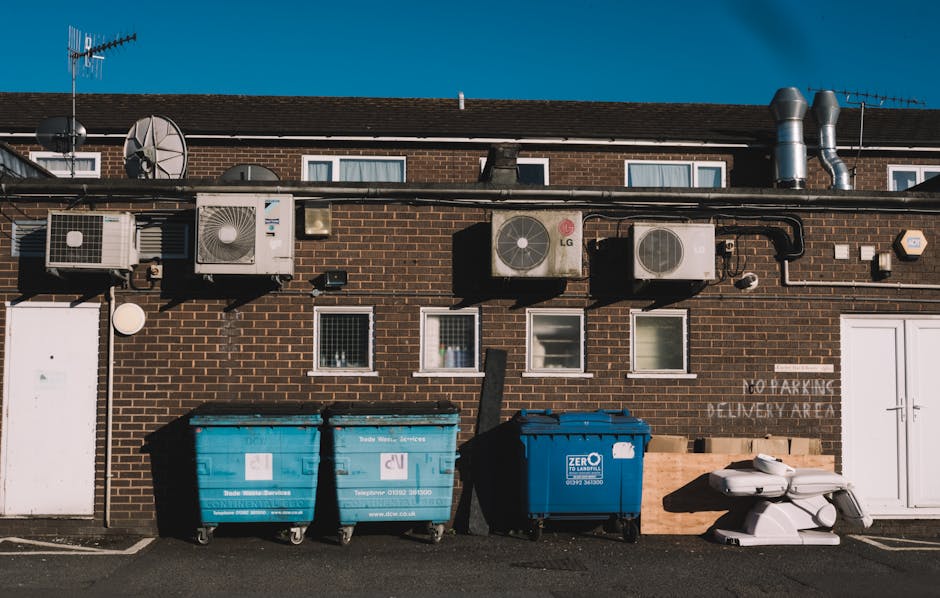
 Tipper Van - Rubbish Removal and Waste Clearance Prices in Tufnell Park, N7
 Luton Van - Rubbish Removal and Waste Clearance Prices in Tufnell Park, N7

